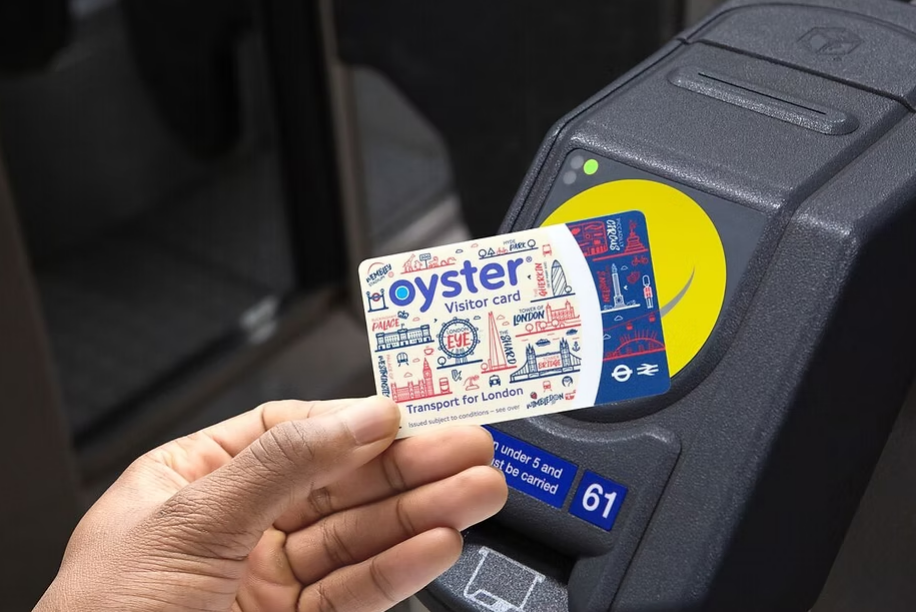
If you have just moved to London for university, a first job, or a fresh start, the transport network can look intimidating from the outside. Coloured lines crossing in every direction, talk of zones and caps and peak times, and a wall of ticket machines that everyone else seems to walk straight past. The reassuring truth is that most Londoners do not think about any of that. They simply tap a card or a phone and go. For most people, contactless London transport is the easiest way to travel across the city, and learning how it works is one of the first things that makes London start to feel like home rather than a place you are visiting.
Contactless lets you pay as you go using a contactless bank card or a mobile device such as a phone or watch. It works across the Tube, buses, trams, the DLR, London Overground, the Elizabeth line, river bus services, and most National Rail services within Zones 1 to 9. It is usually cheaper than buying paper single or return tickets, and it removes the need to top up in advance or work out the right fare before every trip. London rarely moves in a straight line — a Tube to class, a bus to meet friends, a train home in the evening — and contactless quietly adjusts to whatever your day turns into.
The hardest part of contactless is honestly just the first tap. Once you have done it, the rest becomes muscle memory, so it helps to get a couple of decisions out of the way early.
Choose one card or device and commit to it
Before your first journey, pick the single card or device you are going to travel with — your debit card, a credit card, or a card loaded into your phone or watch wallet — and use only that one. This matters more than it sounds, because the system links your journeys together based on the payment method you tap with. Picking one on day one and sticking with it avoids almost every common problem before it can happen.
You do not need to set anything up in advance
There is no account to create, no card to collect, and no minimum balance to load. Contactless works on a pay as you go basis, so you only ever pay for the journeys you actually make. That makes it ideal for the unpredictable early weeks when your routine is still settling and you are not yet sure which parts of the city you will be travelling to most.
The whole system rests on two simple habits. Get these right and you will never overpay through carelessness.
Tap in, and tap out where it is required
On buses and trams, you only tap in at the start of the journey, and that is the entire interaction. On the Tube, rail, DLR, London Overground, and Elizabeth line, you tap in at the start and tap out at the end so the system can work out the correct fare for the distance you travelled. If you forget to tap out where it is required, you can be charged a maximum fare instead of the real one, and the journey may not count properly towards your capping.
Always use the same card or the same device
This is the rule worth repeating, because it is the one new arrivals trip over most. If you tap in with your phone and tap out with your watch, or switch between a physical card and the digital-wallet version of that same card, the system can read them as separate payment methods. That can stop your fares from combining correctly and can interfere with your daily and weekly caps. One card or one device, every single time.
One of the best features of contactless is that it protects you from overspending automatically. You do not need to calculate anything by hand — the system caps your costs as your journeys add up.
Daily and weekly caps explained
A daily cap limits how much you pay over a travel day, which runs from 04:30 to 04:29 the following morning. Once your travel reaches the cap for the zones and modes you have used, any further eligible journeys that day cost nothing extra. A weekly cap then limits what you pay between Monday and Sunday, which is where the savings really show for anyone commuting to the same places through the week. Here are the current adult caps for the Tube, DLR, London Overground, Elizabeth line, and most National Rail services in London:
| Zone range | Daily cap | Weekly cap |
|---|---|---|
| Zone 1 only | £8.90 | £44.70 |
| Zones 1–2 | £8.90 | £44.70 |
| Zones 1–3 | £10.50 | £52.50 |
| Zones 1–4 | £12.80 | £64.20 |
| Zones 1–5 | £15.30 | £76.40 |
| Zones 1–6 | £16.30 | £81.60 |
If most of your life happens in central London, your travel will often fall under the lowest two caps, even on a busy day.
Buses and trams cost less and work differently
If you keep to buses and trams, the fare is a flat £1.75 no matter how far you go, the daily cap is £5.25, and the weekly cap is £24.70. There is also the Hopper fare, which lets you take unlimited bus and tram journeys within one hour of your first tap for that same £1.75. For anyone watching their spending, building bus journeys into your routine is one of the cheapest ways to get around the city.
Contactless makes payment simple, but it does not flatten every fare to the same price. On the Tube and rail-based services, the cost still depends partly on when you start your journey.
When peak fares apply
Peak fares usually apply Monday to Friday, excluding public holidays, between 06:30 and 09:30 and again between 16:00 and 19:00. Off-peak fares apply at all other times. If your schedule gives you any flexibility, travelling slightly outside those windows is both calmer and a little cheaper.
Night travel is charged off-peak
Night Tube and London Overground Night Service journeys are charged at off-peak rates, which makes getting home after an evening out more affordable than the equivalent daytime trip. That is worth knowing once your social life in the city starts to pick up.
A few routes sit outside the caps
Some services do not behave like a standard capped London journey. Heathrow Express and Southeastern high-speed sit outside the normal fare caps, and Heathrow journeys can follow different pricing rules depending on the route and zones involved. These are the exceptions rather than anything you will meet day to day.
This is the question almost everyone new to London asks. For most people settling in, contactless is the simpler answer, but Oyster is not without its uses.
When contactless makes more sense
Contactless is usually best if your bank card works without any trouble, you want the quickest possible setup, and you would rather not manage a separate transport card. For students, young professionals, and anyone who wants the least friction, tapping the card you already carry is hard to beat.
When an Oyster card can still help
A standard Oyster card can make sense if you would rather not use your bank card directly, if you like keeping your travel spending in a separate pot, or if your card might trigger overseas transaction fees. A standard Oyster card currently costs £10 before you add any pay as you go credit or a Travelcard. For longer-term residents there are also student-specific photocard options worth looking into once you are settled, which can unlock discounts that ordinary contactless does not provide.
Most problems with contactless come from a small handful of avoidable habits rather than from the system itself. Knowing them in advance means you will probably never make them.
Switching cards or devices mid-journey
This is the most common slip. Changing payment method part-way through a journey, or across a capped travel period, can stop your fares from linking together. Your caps depend on using the same card or device consistently, so this is the one to be most careful about in your first weeks.
Forgetting to tap out
On the Tube and rail-based services, forgetting to tap out can trigger a maximum fare and stop the journey from counting towards your cap. Buses and trams are the exception, since they only need a tap in at the start. Make tapping out automatic early on and it will never cost you.
Overlooking bank fees on overseas cards
If you are using a non-UK card while you get a local account set up, it will usually work fine, but some banks add fees on each tap. For a day or two that barely matters, but if you are travelling every day it is worth switching to a fee-free card or an Oyster once you can.
There is a moment, usually a few weeks after arriving, when the transport map stops feeling like a puzzle and starts feeling like freedom. Once getting around is automatic, you are far more likely to explore a neighbourhood you have never visited, say yes to plans on the other side of town, or follow a recommendation to an event nowhere near where you live. Easy movement is what slowly turns a new city into your city.
That is where ZYMIX fits in naturally. Contactless makes it easier to get around London, while ZYMIX gives you more reasons to make those journeys by helping you discover local events, new neighbourhoods, and experiences that are genuinely worth travelling for. Once moving around the city feels effortless, finding the places worth going to becomes the part that makes living here exciting.
Contactless London transport works so well because it matches the way the city actually moves: quickly, flexibly, and without forcing you to think about tickets every time you leave the house. The rules that matter are few and easy to remember. Use the same card or device every time, tap out wherever it is required, watch for any fees on a foreign card, and let the daily and weekly caps look after your budget. Master those basics in your first week, and getting around London becomes one of the easiest parts of your new life here.
Can I use a contactless bank card on London transport?
Yes. You can use a contactless bank card or a mobile device such as a phone or watch on London's main public transport services, including the Tube, buses, trams, and most rail routes.
Is contactless cheaper than paper tickets in London?
Yes. Pay as you go with contactless is usually cheaper than buying paper single or return tickets, and it also includes automatic daily and weekly capping.
What is the daily cap for contactless London transport?
For rail-based travel, the daily cap is £8.90 for Zone 1 only and Zones 1–2, £10.50 for Zones 1–3, £12.80 for Zones 1–4, £15.30 for Zones 1–5, and £16.30 for Zones 1–6. Bus and tram only travel is capped at £5.25 per day.
Do I need to tap out with contactless in London?
Yes for the Tube, rail, DLR, London Overground, and Elizabeth line. No for buses and trams, where you only tap in at the start.
Can I tap in with my phone and tap out with my card?
No. You should always use the same card or the same device for both tap in and tap out, otherwise you may be charged incorrectly and your fares may not count properly towards the caps.
Is contactless or Oyster better for someone living in London?
For most residents, contactless is simpler because there is nothing extra to buy or top up. An Oyster card can still suit you if you prefer a separate travel budget, do not want to use your bank card directly, or want access to student or other photocard discounts.